You can use free B-roll commercially when the clip’s license allows it, and free licenses differ in what they forbid. Here is what CC0, public domain, CC BY and the Pexels, Pixabay, Mixkit and Coverr licenses permit, plus the rights no free license covers: people, logos, music and Content ID claims.
CC0 and public domain footage
CC0 means the creator has waived copyright, and public domain means no copyright applies, so footage from Free Nature Stock, ISO Republic, Prelinger films marked public domain and most NASA media can be used commercially without permission or credit. Neither status covers trademarks or the publicity and privacy rights of people on screen; Creative Commons states that CC0 does not affect them.
Pexels, Pixabay, Mixkit and Coverr licenses
These are custom free licenses, not CC0: the creator keeps copyright and the license sets the rules. All four allow commercial use with no attribution (on Mixkit, for Free License clips) and forbid selling or redistributing clips on their own. On top of that, Pexels bans implying that people or brands endorse you, Pixabay bans commercial use of recognizable trademarks for goods and services, Coverr bans using clips to train AI models, and Mixkit’s Restricted License clips are personal and non-commercial only. Monetized videos: all four allow them, except Mixkit Restricted License clips. Ads: Pexels and Mixkit Free License name ads as allowed and Pixabay and Coverr allow commercial use, but avoid clips with visible brands or implied endorsement. Products you sell: Pexels, Pixabay and Mixkit bar selling a clip or frame unaltered, for example printed on a shirt or mug, and Coverr bars reselling its videos. Royalty-free vs copyright-free, explained.
CC BY and credit-required footage
CC BY 4.0 allows commercial use if you credit the creator, link to the license and say whether you changed the clip, so Dareful footage needs a line such as “Video courtesy of Dareful” in your description or end card. CC BY-SA adds that adaptations must carry the same license, and Vidsplay’s own terms require a credit link to Vidsplay.com.
Editorial-only clips, recognizable people and logos
A free license covers the copyright in the footage, not the people, logos or private property in it, and Pixabay and Coverr both say those can need separate permission. Paid libraries such as Getty Images label some clips “editorial use only”: these generally have no model or property releases and cannot be used for commercial, promotional or endorsement purposes. See royalty-free B-roll for commercial use.
Monetized YouTube videos and Content ID claims
Monetization counts as commercial use, so a license that allows commercial use covers monetized YouTube, TikTok and Instagram videos, while CC BY-NC and Mixkit Restricted License clips do not, but Content ID can still match a free clip if someone has registered the same footage, and the claimant can then monetize, track or block your video. A Content ID claim is not a copyright strike, and you can dispute one. Clips with an audio track can also be claimed for the music, so mute or replace audio you have not licensed.
AI-generated B-roll
The US Copyright Office concluded in January 2025 that purely AI-generated material is not protected by copyright, though human-authored elements of a work can be. Whether you may use a generator’s output commercially is set by that tool’s terms and plan, so check them before publishing.
B-roll inside Jupitrr
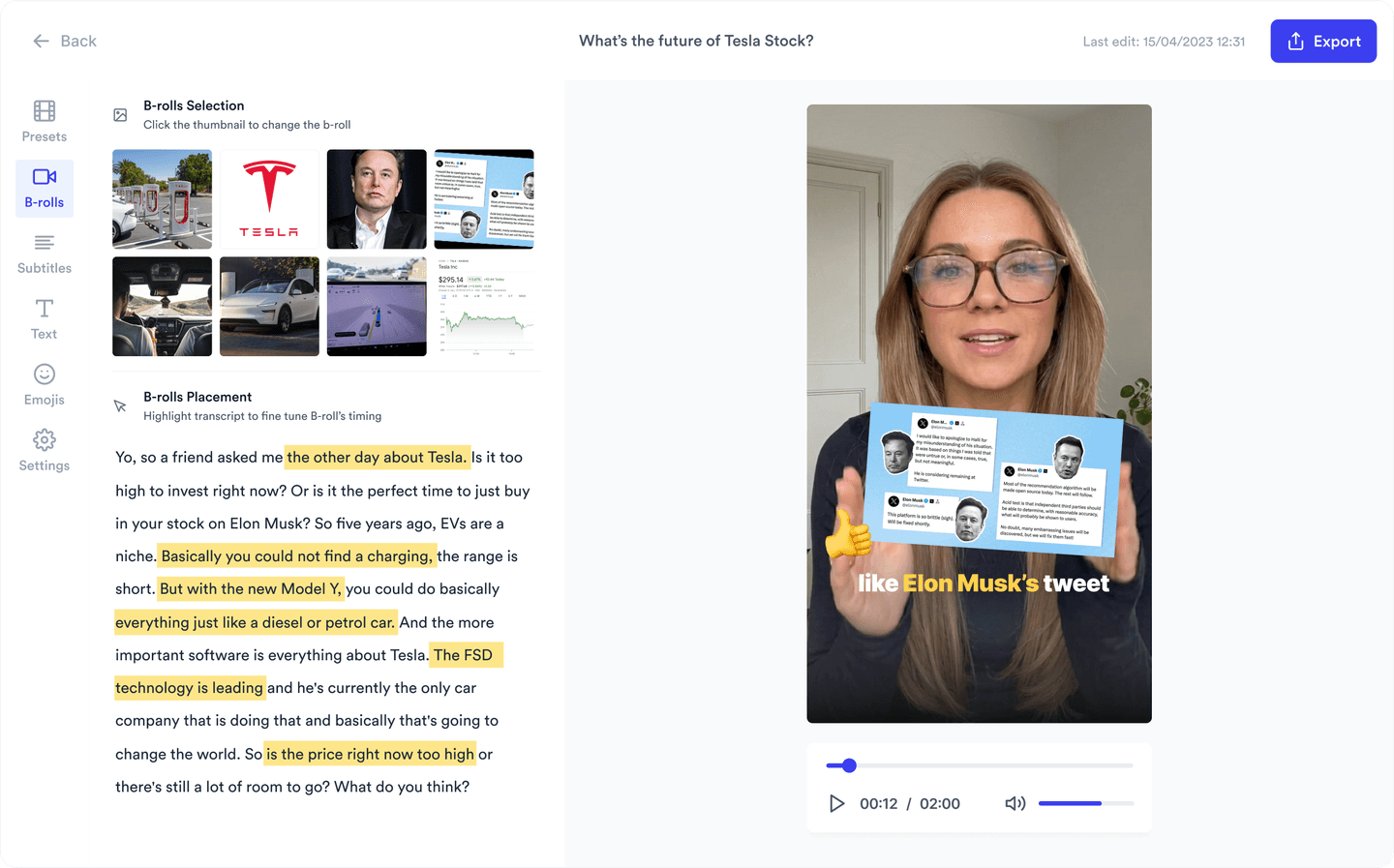
Jupitrr places clips from Getty Images and iStock (on paid plans), Pexels and web images, and its terms say it does not guarantee B-roll is free of usage rights. Check each clip’s license for monetization, ads or products you sell; web images need their rights confirmed.
Monetized videos, ads and products you sell, by license
Our license-by-license table answers the three questions creators ask most: whether a clip can go in monetized videos, in an ad, and on products you sell such as merchandise, templates or courses. The short version: monetization and ads follow the commercial-use rule, while merchandise is where free licenses are strictest. See the monetized videos, ads and products table.
Keep proof of license
Licenses change and clips get removed, so save the clip page URL, the license name and the download date with each project, for example as a screenshot or PDF. That record is what you point to in a Content ID dispute or when a client asks where footage came from.
This is general information, not legal advice. Licenses were checked on each vendor’s site, creativecommons.org and copyright.gov in October 2026; read the current license on the clip page before you publish.


 Pexels
 Pixabay
 Jupitrr AI
 Mixkit
 Coverr
 Free Nature Stock
 Dareful
 Vidsplay
 ISO Republic
 Canva
Canva Wikimedia Commons
 Internet Archive
 PexelsBest for free B-roll overall